The same job title, three very different jobs.
Before you decide whether yachting fits you, it helps to know which yachting you mean. Three choices shape the daily experience more than anything else: sail or motor, private or charter, and the size of the boat.
Sailing versus motor
The same job title means different days on a sailing yacht and a motor yacht. Pick the one whose rhythm you can live with.
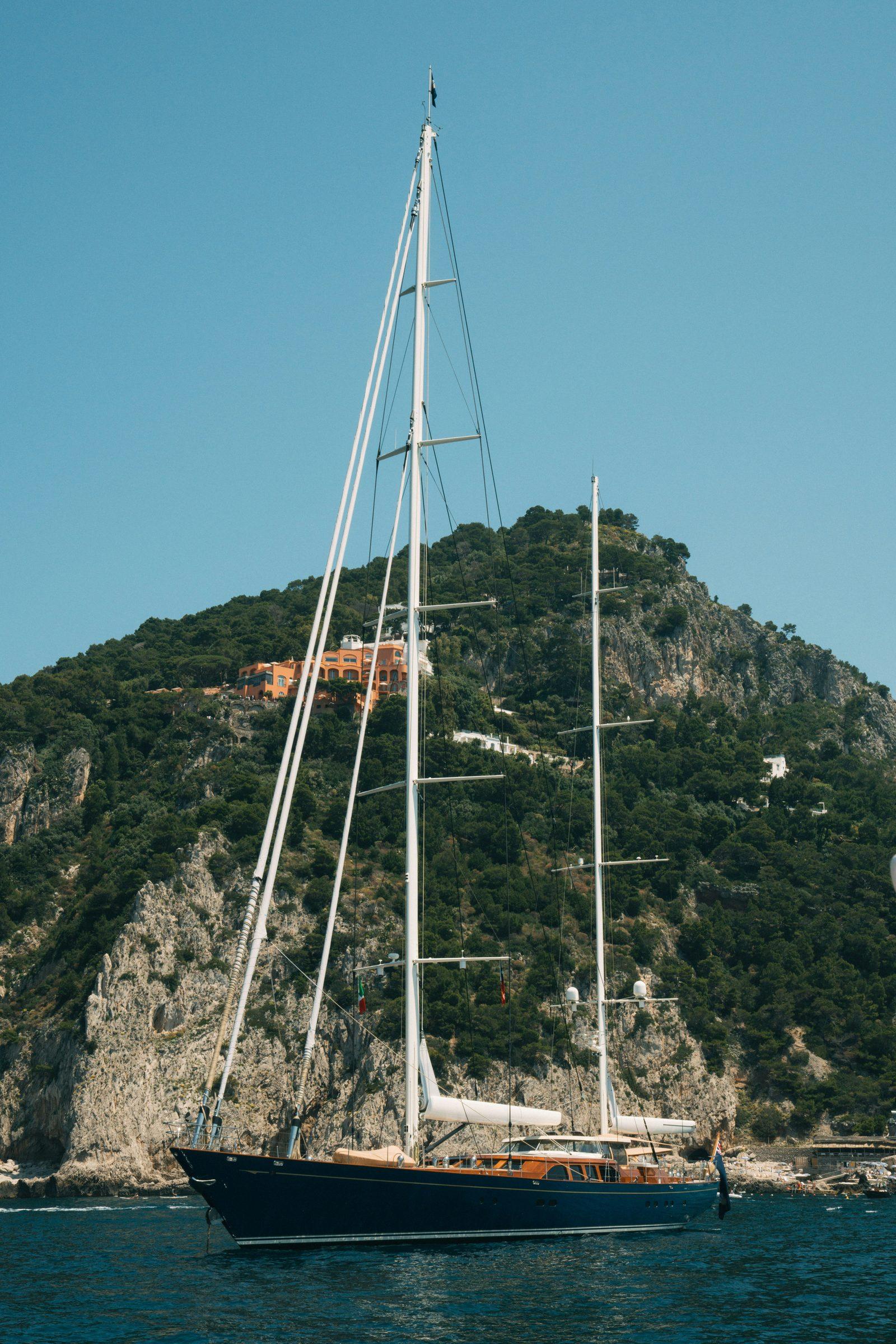
Smaller crews, more seamanship, the weather decides the day.
Sailing yachts carry fewer crew for their length, so every person is closer to the sailing and to the owner. Passages are longer, deck work is physical and skill-based, and the programme bends to wind and sea.
- Crew
- Fewer per metre. Broad roles, close quarters.
- Deck work
- Sail handling, rigging, passages, maintenance in varnish, rope and carbon.
- Pace
- Set by weather and passages, not by a guest schedule.
- Who thrives
- People who want to sail, not only to work on the water.
- Berths
- A smaller part of the industry than motor yachts.
Private versus charter
Who the yacht is for changes the intensity, the income and the stability of the job.

One owner, a predictable programme, a stable crew.
A private yacht serves its owner, family and guests. Seasons are planned around them, there are long periods on standby, and crews stay together longer. Income is salary; there are no charter tips.
- Guests
- The owner’s circle. The same people, higher expectations over time.
- Intensity
- Peaks around owner trips, long quiet periods for maintenance.
- Income
- Salary. No charter tips; some owners pay a bonus.
- Stability
- Crews turn over less. Reputation within the boat matters.
- Fits
- People who prefer consistency to variety.
Smaller versus larger yachts
Length sets the crew size, the hierarchy and how much of the job you get to see.

Everyone does everything.
On a small crew the deckhand also serves dinner, the mate also fixes the watermaker, and the captain is three metres away. You learn fast, carry responsibility early and have very little privacy.
- Crew
- Roughly two to six. Roles overlap by necessity.
- Learning
- Wide and fast. You see every part of running a boat.
- Hierarchy
- Flat. Your attitude is visible every day.
- Rotation
- Rare. Leave depends on the programme.
- Fits
- Generalists who want responsibility early.